
Commercial Lawn Care
Properties That Look Maintained Year-Round
Commercial Lawn Care in Rochester for businesses requiring consistent landscape presentation
Rohwer Enterprises provides commercial lawn care focused on maintaining properties where first impressions influence customer decisions and where inconsistent mowing schedules create visible neglect. The service addresses office parks, retail centers, medical facilities, and industrial properties in Rochester and Dodge City where landscape quality directly affects tenant satisfaction and property perception. Minnesota's variable spring weather and rapid summer growth require adjusted mowing frequencies that prevent scalping during wet periods and maintain height standards during heat stress.
The service includes scheduled mowing with height adjustments based on turf conditions, edging along hardscapes and bed lines, debris removal from paved surfaces, and seasonal cleanup of leaf accumulation and winter damage. Commercial properties require different approaches than residential lawns due to larger square footage, multiple turf zones with different sun exposure and drainage patterns, and the need for services completed outside business hours to avoid customer disruption.
Schedule a property walkthrough to establish mowing frequency based on current turf conditions and growth rates.
What Proper Commercial Lawn Care Requires
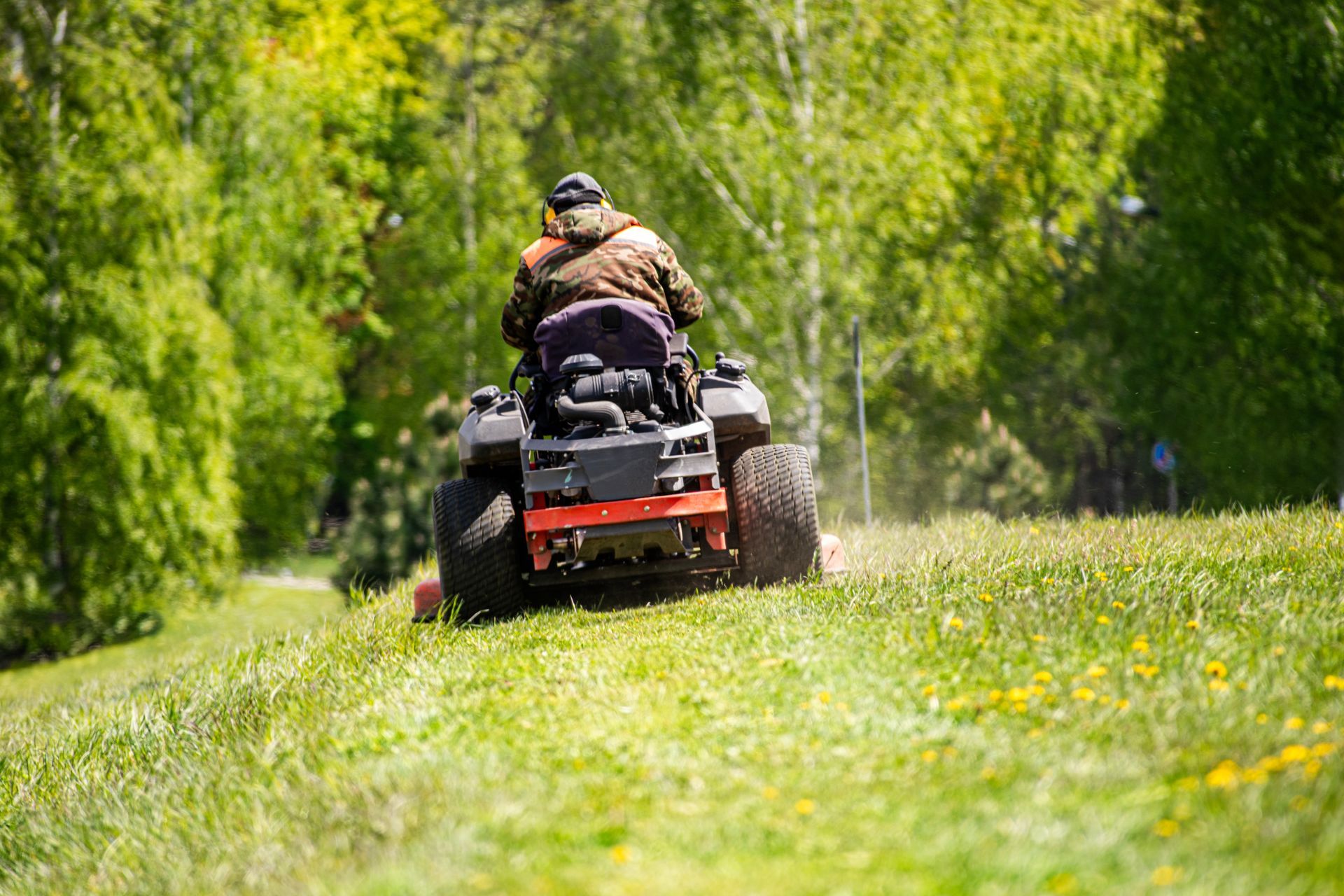
Commercial mowing focuses on consistency rather than perfection, maintaining uniform height across large turf areas while managing high-traffic zones that compact differently than low-use sections. Equipment selection matters for properties with slopes, irrigation heads positioned close to mowing paths, and turf adjacent to delicate plantings where debris discharge needs control. Blade sharpness directly affects cut quality, with dull blades tearing grass tips rather than cutting cleanly, which increases moisture loss during Rochester's dry summer weeks and creates brown tips visible from building entrances.
After service completion, you notice clean bed edges that separate turf from mulched planting areas, clippings removed from sidewalks and building entries, and uniform turf height that eliminates the striped appearance caused by missed overlaps or equipment malfunction. Rohwer Enterprises adjusts schedules when spring rainfall accelerates growth beyond weekly mowing intervals or when late-season drought slows growth enough that mowing every ten days prevents unnecessary turf stress.
The service includes trimming around signage, light posts, and building foundations where mowers cannot reach, but does not include shrub pruning, mulch replenishment, or irrigation adjustments, which require separate landscape management contracts.
Properties with detention ponds, naturalized areas, or specialty turf like fine fescue blends need mowing approaches different from standard commercial bluegrass mixes.
Questions Property Managers Ask Before Contracting
Commercial properties in Rochester often require clarification about service timing, seasonal adjustments, and what mowing contracts include versus exclude.
- What happens when spring growth exceeds weekly mowing schedules? Mowing frequency increases temporarily during May and early June in Rochester when turf grows several inches between services, preventing the shock and thatch buildup caused by removing more than one-third of blade height in a single cut.
- How does commercial mowing differ from residential service? Commercial properties require larger equipment for efficiency across multi-acre sites, coordination with building access schedules, attention to customer-facing areas where appearance standards are higher, and management of turf zones with different irrigation coverage that grow at different rates.
- When should seasonal cleanup occur separate from mowing? Fall leaf removal requires multiple passes in Rochester once mature trees drop foliage, typically late October through early November, while spring cleanup addresses winter sand accumulation and thatch before growth resumes in April.
- What factors affect mowing height decisions? Turf type determines base height, with Kentucky bluegrass maintained at three to three and a half inches for commercial properties, but high-traffic areas near entries benefit from slightly higher cuts that maintain density under foot pressure, while shaded zones under building overhangs require higher cuts to compensate for reduced photosynthesis.
- How are services scheduled around business operations? Mowing occurs during early morning hours before customer arrivals for retail and medical facilities, while office parks and industrial properties allow more flexible timing, with adjustments made for special events, outdoor meetings, or property showings that require advance completion.
Rohwer Enterprises establishes service intervals based on property size, turf conditions, and seasonal growth patterns specific to Rochester and Dodge City. Request a site evaluation to determine appropriate mowing frequency and identify areas requiring specialized handling.